Monday, August 16, 2010
541. Annals of the Bad Day Syndrome ::: Broken, Unreliable Cars or "Autoshop Education on Unexpected Days"
Clips that I wrote along with the images.
>>Annals of the Bad Day Syndrome::: Broken Cars. I only seem to learn about the composition and operations of the beastly machine with wheels that I house and transport myself in so frequently... only when it breaks... always at immensely inconvenient times. Writing about auto-break-downs is probably the only possible way to transform negatives into positive, humorous reflections. Good luck to ME!
>> My poor wittle green, 225,000-mile Toyota Tercel resting in front of Bob's Auto Service, at the intersection of Magnolia and Jurupa. George has been the "doctor" for this car since my ownership (back in 1999 I received the car as a high school graduation present, at 70,000 miles). I want to drive this car until it dies, but now it has electrical problems (and it won't start!)!
>> I waited at Bob's Auto Service for a half-hour today, until my father (knight-daddy-in-shining-armor) came to rescue me in Ray's being Toyota Camry. The parking lot is a bleak landscape, it symbolizes my mind's state of depression. Life keeps happening, and I wish it would stop happening, so I could sit down and reflect.
>> I am learning all about my Toyota Tercel every time something breaks. This time the car doesn't start and it makes a clicking noise. Jules and Wes said it could either be (1) the fuse box (above), (2) the little switch behind the clutch, like a light switch, (3) something in the key-ignition area, or (4) bad starter. George says if I'm hearing a clicking noise, it looks like I have a bad starter. I am developing a lack of trust in my once very reliable Toyota Tercel. It's mortifying that such a tiny little issue is preventing the car from turning on and driving! (I had to replace a couple of fuses in the past, not too many times).
>> Jules and Wes were messing around with this little "light switch" or sensor behind the clutch. Jules even took it out and messed around with it. Apparently that's not an issue. George said he started the car, no problem. Both my father and I are pissed that we wasted our morning towing my car and my body around. I used one of my "4 times" for AAA auto club tow. The tow-truck guy was a very nice, jovial person at least!
541. Annals of the Bad Day Syndrome ::: Broken, Unreliable Cars or "Autoshop Education on Unexpected Days." The most beautiful and most sacred aspect of writing (and storytelling all together) is the ability to transform a very negative event into a positive, humorous reflection. And that nothing that happens in life is a "wasteful experience." And such is the case with today... another day to go down in the books of "Annals of the Bad Day Syndrome."
The other benefit of broken-down cars is that is when I am forced to learn about cars. Basically, I feel cheated by my education system. I was explaining to Larry (in San Diego) the other day that my high school system rewarded students for taking courses like physics and chemistry and higher math, but the the bureacracy penalized students who decided to take more practical, real-world courses like "auto-shop." So, instead of taking a year-long course learning all about the mechanics of cars (and receiving maximum B+ for all my efforts), I ended up taking physics and all these other geek courses that I still feel like my mind is not intimately connecting to my daily life. But cars... cars, especially old cars that break down frequently... IS everyday life. Jules even says that I can get away with not knowing anything about cars (not even knowing how to exactly change my oil, as my housematie Kyle was trying to teach me) because "I'm a gurrrl." Jules says that all I have to do is just smile and act like an idiot female and the guys will take sympathy and fix up my car... ya and jip me and jip me even more for my ignorance, until I feel like today I would have $1000 in the bank if I knew more about cars and did not allow auto mechanics to take advantage of my "feminine ignorance." I feel like a lot of people are earning a lot of money because "certain people don't know certain things that if they had a little extra time and brain space, they could easily learn and save a lot more money." In other words, people earn money because they know certain things that their "customers" don't know. So much for economic rationality.
Well, I'm tired of the "I'm-a-girl" excuse and I'm just going to have to learn slowly, in my own bizarre, painfully experiential ways... how cars work. Ideally, I would love to build a car from scrap, and understand how to build all these energy and electric feedback loops... I would love to start with the Conceptual, treating the Car like a Biological Organism, with organs-parts and flows of energy and fluids (energy, water, and air) (I had a music video vision of overlaying an aerial view of car mechanics repairing a car with an aerial view of doctors performing a surgery on the human heart, one day I will write a poem about this... maybe I already did... is it called "Nonlinear"?)... then the Conceptual can be mapped onto the detailed Practical Nuts-and-Bolts but how I am learning as of present is "something-broke-so-how-do-I-fix-it." Kind of like how doctors learn about how human bodies work. So, right now my car knowledge is limited and fragmented, and "tuition" is expensive, but at least you get a two-for-one "education plus a car repair from a mechanic who might just not jip you and appreciate the customer's inquisitiveness, and take the time to satisfy her inquiries."
I have had two "psychologically destroyed" days--today (Monday) and last Friday--due to a novel electrical problem with my Toyota Tercel car. On Friday, I was innocently pulling up to a USA Gas Station in Lemon Grove, San Diego, and when I finished pumping gas, I tried to turn on my car, but my car wouldn't start. Thankfully I was nearby Jules' house, and he came to rescue me in about ten minutes... and with his magic touch, he was able to get the car started one more time, as we were able to get the car back to his house from the gas station. Then Jules took a break from his work making buoys for his lobster traps and helped me tremendously trying to figure out what was wrong with my car... either being the electric sensor behind the clutch, the fuse box, the ignition, or the starter. I was extremely stressed out and he asked me to wait inside while he messed with my car. We waited for Wes the auto expert to come home, and after an hour or so, Wes came home and he started the car without doing ANYTHING! Jules and I raise our hands, clueless and stunned, and then I was off on my way to Riverside for a hike to Mount Baldy the next day! So, my car worked fine throughout the entire weekend... Saturday a little bit... Sunday all day... and then Monday morning, the car became moody in front of the Rite Aid at the Canyon Crest Towne Center in Riverside (where I met the Great Raguzi, magician!). I discussed with my father and mother on what to do, as I spent my half hour messing with the little electric sensor box behind the clutch and all the fuse boxes, but nothing started!
A very friendly tow-trucker came by Rite Aid very fast after my phone call to AAA Auto Club. He unfortunately had a broken hand from an on-job accident three weeks ago! I ran out of the Rite Aid (trying to buy Werthers and trash bags to consolidate the crxp in my car; I just abandoned the purchase all together!) and before I knew it, the tow trucker and I were on our way to Bob's Auto Service, where I proceeded to clean and patch up the car's front seats a little bit, so George could work without trash being in his face (our family has much respect for George at Bob's Auto Service; he has repaired my car ever since I came to own it back in 1999; I think I knew George since I was 10 years old). My father was frazzled and pissed that his morning was disrupted, as he had to come save me as Bubsy-Knight-in-Shining-Honor.
I waited in the parking lot of Bob's Auto Service, feeling quite depressed and down and empty-headed. My mind craved some serious stimulation and work out, and it unfortunately was not getting any (the previous day was very hard for me, because I spent the entire day patching up meeting notes for the Cal Sea Urchin Commission, I had no mental ownership of my own brain). After a half-hour of gross sweating, my father picked me up, and we pareused over to the Starbucks for coffee (at least to cheer Bubsy up and calm him down!) and then I attempted to drop off my father in front of his office by the UC Riverside Geology Building, but all these bulldozers were destroying the entire geology loading dock behind the building. We wasted another 15 minutes trying to find parking by the botanical gardens or at the visitor's lot by the Science Library, but no, you can ONLY park for two hours, that's it! Where's the lot for whole-day parking? There were no full day visitor passes?! Finally, I dropped my father off, and decided to head toward the University Starbucks to work for a little while, at least (to let you know, that's ANOTHER SYMPTOM of the BAD DAY SYNDROME, when MORE THAN ONE HOUR PER DAY OF YOUR LIFE IS DEVOTED TOWARD FINDING A PARKING SPOT, ESPECIALLY BY A UNIVERSITY, ATTEMPTING NOT TO GET A TICKET). By that time, I was considering suicide and how my life was falling apart... and then... I ventured into the Starbucks, and started writing, venting, writing.... Here I am trying to draw cartoons of highly conceptual issues, and I need to massively catch up with myself at the level of writing. I feel the bubble of ideas inside me.... I most certainly need some streamline writing exercises.... just to sort out my mind and untangle an overwhelming accumulation of un-accounted for experiences.
Then the other dilemma is that "I feel guilty for writing because I'm not writing about anything pertinent toward my Ph.D. or pertinent to society." WELL, FXCK EVERYONE WHO MAKES ME FEEL GUILTY, BECAUSE I HAVE THE RIGHT TO WRITE, JUST AS I HAVE THE RIGHT TO BREATHE AND THINK ABOUT ANYTHING THAT I HOOHAAAHEY WANT TO AND I DON'T GIVE A FXCKING FXCK THAT MY WRITING HAS NO FXCKING MEANING ANYONE FXCKING ELSE AND I DON'T CARE IF MY WRITING DOESN'T FXCKING ADVANCE TOWARD MY PH.D. BECAUSE PEOPLE WITH CLOGGED BRAINS DON'T PRODUCE MEANINGFUL PH.D. DISSERTATIONS ANYWAY! AND EVERYTHING IN MY BRAIN IS FXCKING CONNECTED WHETHER PROFESSORS LIKE IT OR NOT; IT'S FLIPPING FEMALE NEUROBIOLOGY, WE'VE GOT MONDO CORPUS CALLOSUMS, OKAY? AND IF "THEY" (GENERIC "THEY") EXPECT ME TO STARE AT A SUBSET OF A SUBSET OF A SUBSET OF A SUBSET OF A SUBSET OF A SUBSET'S SUBSET FOR 5+ FXCKING YEARS, THEN THIS WHOLE ACADEMIC SYSTEM IS FLAT OUT FXCKED UP! Well, now that I said this, and I feel a bit better, I sincerely hope no one reads this.
And then again, people have the right to be emotional when they have car problems. I thought flat tires and worn clutches, being stuck in the middle of the 101 freeway on the Camarillo Grade were "anti-climactic," but when your goshdanged car doesn't even start, with some put-put clicking noise in the background, it's so pathetic, you feel your car is dead, and that you're dead and gone. And I'd rather have a flat tire on the 405 freeway than have my car not start in some calm parking lot. I don't want my car to die! I don't want the flame to go out!
Okay, ya, so here I am at Starbucks, writing about writing, as what writers do, tend to write about themselves writing about their friends writing about writing, because they're writers and they are paid for their "writing labors" (well, at least I'm writing about my car!). I'm just trying to convince you that writing is no longer a valuable skill, because anyone can write nowadays! Earlier I rapped up a blog, updating about my mother's bizarre eating habits... and now I feel a little bad for saying all that I did say because I just got off the phone, and my mother was willing to pitch in $100 toward the repair of my car starter...
Aha! The Car Starter? So, while I was writing away this afternoon, George called and told me "I started your car without doing anything." And I was like, "What?!! That's not possible!" And I told my father over the phone and he was pissed. And I told George, this is bizarre; this is exactly what happened last time... on Friday. George said he was suspicious that the problem could be traced to the starter, but he wasn't willing to do anything unless if the car wouldn't start. He wasn't exactly interested in fixing a car that actually worked. So, I made arrangements to pick up the car this evening, and then, after my blogging about my bizarre mother's eating habits, I start to look up information on the internet on the costs of a car starter (with solenoid), and it seemed like the average cost ranges from $83-$100 for re-manufactured starters. Then what was really cool was that I found some instructions on how to replace a car starter on http://www.ehow.com, and even COOLER was I found some instructional videos on how to diagnose and replace your car starter, which I watched, and it seemed pretty straight forward, but every car is different, and one may have to move around some other parts to get to the starter. And then what was SUPER COOL, no, no, SUPER MONDO COOL, was that I accidentally found some websites that specifically and directly addressed the exact same symptoms my Toyota Tercel was experiencing (Tercels, 1995-1999 models). And these 5 or 6 websites all pointed exactly toward the same diagnosis: if there's not too much corrosion on your battery, and your car battery is very secure, AND your lights come on (electric's fine), but your car is clicking, and not starting... then it's the bad connection between the solenoid and the starter, and so it's best to get the starter complex repaired. Routine symptoms, routine diagnosis, routine treatment. And I became very excited because I was unsettled taking back a car that could just stop working in the middle of nowhere in particular, and finally... something could be done!
I called George back and he said... "Sure, no problem, I can replace the starter, but you can't get your car back today." I'm cool with that. I asked for a quote, which was $290 parts and labor. *Gulp!* Then I called my mother, and I will be paying $100, my $100 birthday money will go to the car, and my mother will pitch in $100 more. My mom told me not to tell my sister Jenny because she always compares and such, and plus my parents helped my sister a lot during her schooling (but my parents did and DO help me a lot too, and I will need lots of help this upcoming year). But my mom always says that "don't tell your sister," maybe she is trying to make me feel special. And honestly, it's nice sometimes that people try to make you feel special, even though in the broader scheme, you're just an object, a body count, a number in the system.
I called Jules and he was pleased with the situation. He's going rock cod fishing tomorrow. In a certain way, this day was a total waste, but in another way, I learned something about cars... in an unexpected manner.... Bad day turned good. I didn't control my ocean today, but I had to ride unexpected, and unruly waves.


Wednesday, July 21, 2010
540. Public Session Hosted by "MPA Monitoring Enterprise," Associated with the MLPA (Marine Life Protection Act) Process
 Oh yes, another typical hotel meeting room, this time at the Merigot, in Santa Monica, California. Another typical meeting, as on the surface, seems very boring, but the issues discussed, and the minds involved... are very exciting... So, my own mind occupied this hotel room for 5 minutes, and otherwise occupied the conceptual designs and monitoring of south coast marine protected areas!
 Same image, black, white, and gray.
 As so the recipe goes, core discussion and swaying always seems to happen over lunch, dinner, and at the bar. Never really in the formal meeting process. Wine and cheese schmoozing throughout the entire MLPA BRTF initiative process (first BRTF meeting I thought that all the stakeholder were engaged in some kind of amicable Thanksgiving Feast!). More conversation over lunch in the sheltered ambiance of the Merigot.
 Same image, black, white, and gray.
 Well, well, where do we start? My brain is extremely anxious because of Comic-con, and despite the start of the conference drastically approaching, Bob Bertelli convinced me to attend and (god forbid) participate in this public workshop designed for discussion on how to set up monitoring for south coast marine protected areas (MPAs). I started stuttering over the phone, "Bob, I've been a keen observer all this time, a bystander, since fall of 2008. Someone intensely watching, recording with camera and film and audio and notes. Now you want me to PARTICIPATE? I'm 28 years old and I have no sea tenure (I barely know how to scuba dive and I've only caught two real fish, with the help of someone else) and my being an academic, I'm an educated idiot!" Bob convinced me that I should have more confidence and I'll have something to contribute, and so I decided to attend... without so much personal pressure to visually document with photography and film.... Which is nice for a change, not to hide behind a camera for once....
I slept in Riverside (my folks house), woke up 5am, hopped in the car at 5:10am, drove for an hour and fifteen minutes to Santa Monica (no traffic!) got to a rather quiet, deserted "Santa Monica ghost town" around 6:30, ran some errands at the closest open grocery store, found a FREE GOLDEN PARKING SPOT one block away from the Third Street Promenade (and a Starbucks Coffeeshop), and by the time I found this parking spot, I couldn't help thinking how I was bound to have a good day, because most of my spare time in Santa Monica in the past was often revolving around traffice and parking... but somehow today, I'm managing to bypass both of these arduous tasks. I ended up taking a long jog at the Santa Monica Beach near by both of Cousin Mike's previous apartments, imagining how Dr. Kennedy was explaining to me the sedimentological history of Santa Monica Beach back in 2006 (I wished I remembered more, I couldn't help thinking how much sand there was!). I also saw a dude who looked like Richard Dawkins (but he was jogging!) and I couldn't help thinking that probably almost everyone I lay my eyes on has a high likelihood of having some form of Hollywood status of "fame" or "nobility producer position." So, whatever. Me and my raggedy jogging clothes. Yay! I'm just a passerby. Bob called me toward the end of my jog, and I rushed back to the car to get all my stuff together, like change clothes while I was driving my car three blocks over to the Merigot. By the time I entered the hotel, I swear I was intrinsically ashamed, because here's my ghetto green Toyota Tercel entering some elitist hotel with lexuses and mercedez benzes wherever you looked. I told the Valet dudes (three of them), "I'm sorry." And the man said, "Ma'am, do not worry whatsoever. The only people who will see your car is us." I was frazzled, as I accumulated all my items, and some door man opened the door as I entered some Microcosmic Hotel where I swear across the street you could see 15 bums and five run-down buildings. Santa Monica is such a bizarre landscape of extreme "wealth and lavishness" in a backdrop of run-down buildings and homeless tweakers and crack addicts and such. I felt guilty for stepping into some kind of manicured Hotel Utopia right next to... normal society.... I don't know how all these MLPA operations can afford having meetings in such well-to-do places. Some other man in suit and tie guided me to the location of the meeting, and then finally I felt better because I spotted Bob and Josh Fisher and a few other familiar faces from the south coast MLPA Regional Stakeholder Group. *Whew.* And a lot of new characters, like a high school teacher from Team Marine, a professor from Occidental College, and a few Chumash representatives, wow, so cool! There was also this really cool dude named Ken Kerns? who is a representative of the Statewide Interest Group and made a few comments ensuring the smoothness of the process. He's a spunky person! And a few faces from way back... like Tom Ford, someone I scubadove with at Malibu, five years ago, when I was at UCLA! Amazing! Tom... is simply... hilarious! A free living, walking, breathing comedy show. Great to be around. So, the world becomes smaller and smaller and smaller, eh?
Bob saved a spot for me right by him and Josh, and I couldn't help to notice the arrangement of the room. A long U-shape assemblage of tables where all the "public participants" sat, with a slide projector, screen to the front, and podium to the side. Another table was placed on the other side, where individuals from "MPA Monitoring Enterprise" sat. I do think that's a scary name for such an operation. "Enterprise" has connotations of entrpreneurship, corporate business operation, though it is a non-profit group consisting of a team of scientists who are contracted by California Fish and Game Commission to set up and establish monitoring protocols without the baggage of stating any management recommendations... except to manage the monitoring.... I wished a better word were chosen beyond "Enterprise," but who am I? An educated idiot grad student, so I have no say in such a matter.
The meeting went from 9am to 5pm, and can be broken down into four sections. First, the meeting organizers provided their schpeal about an overview of MPA monitoring, and how to approach monitoring in the south coast, from an overarching perspective. Secondly, was lunch. Mexican food, fajitas! Yum, yum! And chocolate chip cookies and peanut butter and oatmeal... for snacks! Why don't they ever serve fish at these operations?! Just to be politically correct?! Thirdly, was a breakout session to discuss components of the "ecosystem" in which public members valued and desired to be monitored. We reconvened afterwards. Fourthly, was a breakout session that discussed "designer ecosystem questions," which placed the fishermen in shock because it was the first time we were ever asked to wear the hats of the Science Advisory Team, and ask fundamental questions relating to whether MPAs worked or not. The Regional Stakeholder Group was SOOO used to being "bullied around" by "moving goalposts" of the Science Advisory Team for the past year, and that suddenly we were asked questions such that if we had criteria and parameters for designing and re-evaluating MPAs, what would we do, what questions would we ask, which then, my rambunxious Group 1 asked a string of questions that probably entailed 10-15 potential Ph.D. dissertations.... Now, that was fun! And after these two breakout sessions, we re-convened, and MPA Monitoring Enterprise told everyone they would have another public meeting sometime in October where these meeting notes would be processed and shown to us for further evaluation, and then I said adios to Bob and Josh (who chose to drive out in the 5pm traffic, nutso!) while I zoomed out of that Utopia Hotel and recommuned with the hobos and other regular people on the street. I found another ideal parking spot near by the Third Street Promenade, where I came to enjoy some works of two street performers, and confined myself to the back of a Starbucks, where the line to using the restroom was longer than the line for purchasing coffee (I think that's a good joke for a comedy routine, sad but true). While I was walking along braindead, my mind started to craft a song, "I don't see anyone, going anywhere, anytime soon // so I'm just chilling out, hanging out, making up a silly tune // cuz these silly songs, are th' only means to sanity in the traffic of Hollywood // cuz these silly songs are the silly means to makin' money in the Hole of Hollywood."
Bob saved a spot for me right by him and Josh, and I couldn't help to notice the arrangement of the room. A long U-shape assemblage of tables where all the "public participants" sat, with a slide projector, screen to the front, and podium to the side. Another table was placed on the other side, where individuals from "MPA Monitoring Enterprise" sat. I do think that's a scary name for such an operation. "Enterprise" has connotations of entrpreneurship, corporate business operation, though it is a non-profit group consisting of a team of scientists who are contracted by California Fish and Game Commission to set up and establish monitoring protocols without the baggage of stating any management recommendations... except to manage the monitoring.... I wished a better word were chosen beyond "Enterprise," but who am I? An educated idiot grad student, so I have no say in such a matter.
The meeting went from 9am to 5pm, and can be broken down into four sections. First, the meeting organizers provided their schpeal about an overview of MPA monitoring, and how to approach monitoring in the south coast, from an overarching perspective. Secondly, was lunch. Mexican food, fajitas! Yum, yum! And chocolate chip cookies and peanut butter and oatmeal... for snacks! Why don't they ever serve fish at these operations?! Just to be politically correct?! Thirdly, was a breakout session to discuss components of the "ecosystem" in which public members valued and desired to be monitored. We reconvened afterwards. Fourthly, was a breakout session that discussed "designer ecosystem questions," which placed the fishermen in shock because it was the first time we were ever asked to wear the hats of the Science Advisory Team, and ask fundamental questions relating to whether MPAs worked or not. The Regional Stakeholder Group was SOOO used to being "bullied around" by "moving goalposts" of the Science Advisory Team for the past year, and that suddenly we were asked questions such that if we had criteria and parameters for designing and re-evaluating MPAs, what would we do, what questions would we ask, which then, my rambunxious Group 1 asked a string of questions that probably entailed 10-15 potential Ph.D. dissertations.... Now, that was fun! And after these two breakout sessions, we re-convened, and MPA Monitoring Enterprise told everyone they would have another public meeting sometime in October where these meeting notes would be processed and shown to us for further evaluation, and then I said adios to Bob and Josh (who chose to drive out in the 5pm traffic, nutso!) while I zoomed out of that Utopia Hotel and recommuned with the hobos and other regular people on the street. I found another ideal parking spot near by the Third Street Promenade, where I came to enjoy some works of two street performers, and confined myself to the back of a Starbucks, where the line to using the restroom was longer than the line for purchasing coffee (I think that's a good joke for a comedy routine, sad but true). While I was walking along braindead, my mind started to craft a song, "I don't see anyone, going anywhere, anytime soon // so I'm just chilling out, hanging out, making up a silly tune // cuz these silly songs, are th' only means to sanity in the traffic of Hollywood // cuz these silly songs are the silly means to makin' money in the Hole of Hollywood."
As I'm reviewing my notes, I decided to write here some takehome messages of the day from this meeting, as well as ideas for cartoons, concept toys, film clips, and other forms of media. Coming to think of it, this is the first blog I have written about the MLPA process in a year. It's been a while. I think this whole process stresses me out because it's so overwhelmingly huge and that I think I can grasp it, but then again I feel like a little sediment gushing down some river where I feel that the question of control has just gone down to the physical elements and that a single human agent has no... agency.... So? I'll enjoy the ride of process, though I have a purpose, though the purpose is so insignificant, that it has been crushed to process. I'm a meeting body count. Yay (I'm already used to that). Well heck, at LEAST I got to hang out with Bob and Josh and get a free lunch!
**MPA Monitoring Enterprise stated from the beginning that they were taking an "ecosystem-based management" (EBM) approach, including humans, so more of a nested-scale hierarchy, umbrella of monitoring programs. Old news to me... that's the whole UCSB cult... ecosystem-based management, generally, several marine scientists are EBMers now. But but but! This is a misnomer, ecosystem-based management. If the MLPA process were EBM, (1) it would not be housed largely under the Department of Fish and Game (it would be under some new inter-agency umbrella organization) (2) it would have not only restricted fishing, but would have made more effort in waste-sewage issues rather than just "avoidance behavior" of sewage outfalls, aka prescription would have involved simultaneous regulation of ocean inputs and outputs and (3) so? Dangit. I forgot my third point... give me some Time To Think (T3) here....
**MPA Monitoring Enterprise used the "doctor metaphor" for understanding the process. Though it's an imperfect analogy. So, let me try to elaborate (or unpack) this metaphor. The ocean can be considered an organism. The ocean has been diagnosed as "sick" (Jeremy Jackson in summary: "The ocean is going to hxll. We're taking too much out and dumping too much in.") and is "human-induced" (not non-human-induced, like El Ninos and Pacific Decadal Oscillation cycles) and therefore since we caused the problem, and a problem is a problem, if we humans perceive it to be a problem, and therefore the ocean is in a humanly undesirable state, and we humans are responsible, and we humans need a healthy habitat to live in, we need to "heal" and "cure" the ocean (prescription, medication, surgery, aka Designer Ecosystem). Medications and surgeries should curb "taking too much out" and "dumping too much in," which would be in the form of fisheries management, marine reserves, restoration-enhancement sites, and technological/sewage-waste treatment/human population management. The medication we have been focusing on is ONLY MARINE RESERVES, which is of course, non-coordinated with fisheries management and human population-waste management. It's like telling me that we're going to cure cancer but today we're only going to discuss and implement "radiation therapy" without the "chemotherapy" and "diet/habit/lifestyle changes." Ya, so whatever... human-enviromedicine is way behind. We're in stoneage ocean and earth therapy for our own individual and collective benefit, I guess you can say. When an MD imposes a medication, surgery, or therapy on a patient and asks "Does the treatment work?!" then we're in BAD shape... because MD's are supposed to proclaim with certainty "this treatment WORKS X percent of the time." We primordial earth ecosystem prescriptive scientists can't even say for certain "MPAs WORK." Shxt. Oh shxt. But what can I say? Just because you don't know doesn't mean you shouldn't do anything and let things going by. Doing something is doing better than nothing, that is for sure.
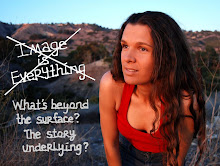
Another issue is that different doctors would diagnose the ocean with different levels and scales of sickness, and certain doctors wouldn't even say the ocean were sick, and that the severity of the sickness varies as well--is the ocean in a state of Stage 4 lung cancer or a mild case of bacteria in the ears? Or common cold? I'm sure it's somewhere in between. So, now we have a few thousand doctors trying to prescribe medicine for an ocean that is perceived with different varieties and scales and degrees of severity of sickness. And it's not just a sickness issue, it's a wardrobe aesthetic issue. It's about ocean fashion too. How the ocean looks like, how we crave for our "natural underwater parks" to look like as our Japanese Gardens, designer ecosystems. So, we also have to consider what wig or toupee we're going to put on our marine protected area after it lost all of its hair through radiation treatment. Image is everything, Agassi and Canon Rebel once said. Goes along with our MPAs too. **MPA Monitoring Enterprise also discussed how doctors take a few initial measurements (such as temperature, pressure, and pulse) to serve as diagnostics for human health. The question is, are there a few indicators or diagnostics for the ocean that would likely best represent overall ocean health? How do we take the pulse of the ocean, and how would we construct the notion of a "healthy pulse" or "healthy metabolism of the ocean"?
Expanding the doctor metaphor conversation with a phone call with my father: If environment-related scientists and scholars are to become and embody the doctor MD diagnosis-and-prescription metaphor, then I could clearly say that environmental doctors are in the stone age of medicine and surgery: (1) environmental doctors have no clear-cut hierarchy of diagnosis for a healthy or unhealthy ecosystem (e.g. taking pulse, temperature, and blood pressure, then going from there, there is no magic probe for measuring ecosystem health) (2) environmental doctors don't even know that their treatment will work, let alone have a percent chance of survival (e.g. "Do MPAs work?" is still a QUESTION, not a percent chance of success, like 90% chance of survival post cancer treatment) (3) environmental doctors do not engage in holistic treatment (e.g. control of inputs and outputs, like control of fish take and sewage dumping and landscape enhancement all under the same breath, e.g. right now they are focusing on radiation without the chemotherapy) (4) a wad of environmental doctors all on the same roam would have different diagnoses at different scales with different ecosystem-body components with various degrees of severity of the problem, due to the point of view effect, blind men feeling parts on an elephant, variations in value systems, degree of specialization of disciplines, etcetera, universals in diagnosis are less apparent and less confined contained than with human body medicine (5) environmental doctors do not prescribe treatment strictly for medical-environmental health purposes, collective survival purposes, superflous value systems are also included, such as aesthetic (shallow beauty, stimulating pleasure center, image is everything) and heritage (deep knowledge of a system, Kantian sublime blah blah bullshxt stuff). Which makes diagnosis not survival related but also diagnosis containing a level of aesthetic. Environmental management is like dentistry; certain forms of dentistry operations are for needed survival and functionality for chewing, but many dental decisions are made for image-based purposes, like the color coordination, size and shape of teeth, spacing teeth so that there's no embarrassing gap, etcetera.
**About a year ago, I had a fantastic discussion with Merit McCrea (who whenever I talk to, I feel like I'm talking to a professor and not a fellow grad student, because he knows SOO MUCH STUFF about the ocean, from a fishing AND academic perspective)... so Merit told me this analogy. If you placed a scientist in a black room that symbolizes the ocean, and you gave the scientist a flashlight, what the scientist would do is beam the light very brightly in one spot, with very high resolution. And then he would use some math model to connect the dots for a conceptual overview of how the rest of the black ocean works. Then Merit said, if you give a fisherman a flashlight in a dark room, the fisherman would illuminate the light everywhere such that the entire room lit up, though in one particular, specific area, the light would be grainy, diffuse, and in low resolution, the fisherman would have a rather large conceptual mental map of a region of the ocean, that was generated by experience, not by a math model. And of course, based on the problem and project at hand, they would focus on specific dots at the time, but the overarching "conditions" could never be lost in order to function out in the ocean.... They would know how all the dots connected, in a way that allowed their daily survival out in the ocean, and getting by to catch fish to feed oneself and earn for the family. So hence, we have two types of people learning new things about the ocean world in very different ways, and each has their advantages and disadvantages. MPA Monitoring Enterprises knows they are shining lights on a few very, narrow, bright spots, because that's how science does it, because that's how science has been done before, and scientists are just creatures of habit and historical convention sometimes, and science has not placed any value on those who have a mental map (cognitive map) that can illuminate the whole room, because it cannot be quantified, because science loves numbers. Who does this work of illuminating the whole room? Who tries to construct the narrative of human-environmental change? Historical ecologists and environmental historians--who are placed in humanities and social sciences (largely). But there were none of those at this MPA Monitoring Enterprise meeting. Science does not value holistic experience and narrative, because you can't numericize stories. Stories are stories, they are the spoken words, image, emotions, but of course, no place for that in science, no place for that in monitoring. No one discussed taking oral histories of fishermen as a line of data... I wished I had mentioned that. Oh well.
I thought Merit invented this metaphor of shining a flashlight in a dark room... I must ask him who invented this metaphor now that I have heard it twice, from two very different mouthes. I found out that the MPA Monitoring Enterprise received a dose of Merit McCrea up in Santa Barbara. Maybe they were inspired. :-) One way or another, I need to cite my sources, and since I heard it from Merit first, I'll cite him.
Bob said that fishermen have their high beamers on, scoping the conditions, and over time through trial and error, weed out the distractions and focus on what is pertinent for the project. Scientists on the other hand have no incentive to scope and are invited to dive into a narrow discipline for their entire lives without any justification except for an arbitrary liking of a subject and historical contingency of some specific discipline rather than using instrinsic caveman optimal foraging skills to focus on specific environmental elements. Fishermen think in hourglass mode, whereas scientists are specialized and narrowed into belljars, from my point of view.... Which ultimately explains why I myself like to and kind of need to be around fishermen because my mentality matches their mentality better than those of scientists. I can't make decisions based on historical contingency and arbitrary likings. I need to make decisions because somehow they touch upon the core essence of survival, like catching food for dinner.
**This dichotomized, controversial notion of "consumptive" versus "non-consumptive" uses of the ocean is becoming pervasive in the literature and protocols, as I had first encountered this labeling in a scholarly article by Ecotrust, continued by MPA Monitoring Enterprise. This labeling is (1) grossly oversimplified, dichotomized (2) discriminating and stereotyping, basically anyone who fishes and anyone who impacts the ocean through all other means other than fishing, which includes eating fish that the fisherman fished for that day. I asked an employee of the Department of Fish and Game about the "origins" of this dichotomy and he said he did not know, but though he agreed that there is a gradient of use of the ocean, from consumption to production and waste, there was some level of "utility in classification" such that scientists could collect their data appropriately. Well, that's still not fair, because this "labeling" frames the way how scientists gather whatever desired data in the first place! Argh! Bob Bertelli suggested using the terms "primary and secondary consumptives" rather than "consumptive" versus "non-consumptive." And besides, consumption is not the only way how humans USE the ocean. What about PRODUCTION? Of waste? So, who in the hoo-haa-hey is going to listen to this and overturn and re-organize an entire massive dataset? No one, of course. Do what you keep doing, label how you keep labeling, because it's convenient, and that's what it has been done before, and we need to match the data sets, it's not what is right or wrong or more accurately portrayed. I'm not dxmning any humans, but "Dxmn Incumbency," I do say.
So... in the monitoring section, I recommended that there should be a breakdown of "direct" versus "indirect" impacts of human uses. Ecotrust failed to look at multiplier effects of socioeconomics (analysis "stops at the dock" so they said) and I think that these multiplier effects need to be considered. I also reasoned that in terms of short term benefits and costs, fishermen are directly and negatively affected (but in the long run, may be positively affected), and that all those folks involved in education, tourism, recreation, valuations of natural and historical heritage tremendously benefit, short and long run. It's an easy call to make... a simple conclusion. I don't exactly need to measure or collect data this at the moment.
I think that since benefits and costs of MPAs are highly dependent on the point of view (ie "what is perceived as good or bad is arbitrary, non-Biblically determined, and is highly dependent upon the point of view rather than clear-cut universals" e.g. sea urchin barrens as "good" or "bad"?), that there should be a few separate, independent groups of researchers to evaluate the same data such as to enable some level of control for the point of view effect (hmmm... I think I just had a good idea!). Because, of course, scientists will be a little more eager to show net benefits of MPAs in terms of numbers and sizes of fishies, and of course, fishermen will be a little more eager to show negative socioeconomic impacts of MPAs, it's human nature to have a point of view, and that a few separate agencies should do their own unique analyses such as to enable how data can be intepreted differently based on the point of view. (Expanded conversation with my father: the Point of View POV effect is also similar to the Shifting Baseline Syndrome SBS effect, in which people have evolved different baselines of understanding, focusing on scales in space and time, the POV effect overlaps with SBS, but primarily focuses on how that particular individual relates to and interacts with that particular system, in this case, the ocean. For example, a fisheries scientist funded by NOAA will have a certain special interest on fish, revolving around the agenda of the funding source, and a marine ecologist funded by the Packard Foundation may have a certain special interest on larvae, and a fisherman may have a certain special interest on socioeconomics. Science is not unbiased to POV and special interest. As long as their are specialized disciplines, there is special interest, PERIOD. Science IS politics, PERIOD).
**Concept Toy: Empty cube fish tank and get a bunch of plastic figurines of all the players or "agents" of a California kelp forest / sandy bottom ecosystem. I need to go to some nature store and buy some plastic California ocean toys.... I wonder where I can get this cool stuff? Like Design your own MPA kit?
**Cartoon of the Day: Five years, waiting in line at the University-Mart (Uni-Mart), Fisherman brings in a broken, half-open box that says MPA written on it. Fisherman gives scientist receipt for dozens of thousands of dollars. Fisherman says, "I want to return this product, because still after the five year warrantee, it doesn't work." A fisherman asked at the meeting today, "If MPAs don't work five years from now, can fishermen get their money back?"
**Cartoon of the Day: Ph.D. Question for Fisherman: "How does my blood pressure change when DFG closes off Laguna as a marine reserve?" Ha! Correlating human health with human-environmental / political change
**NEW WORD: Nature Deficit Disorder (NDD), southern California concept, Bob Osborn mentioned, "You gotta have some nature in order to interact with nature." Bob O. is kind of funny. He sounds like Mr. Mackey from Southpark, "Nnh-kay?"
**Another Cartoon of the Day (and NEW T-SHIRT!): Dr. Randy Olson worked with some non-profits to design some campaign slogan for MPAs, specifically during the south coast MLPA process. A bold statement was printed on hundreds (thousands?) of shirts: "MPAs WORK." Alternatively, the beginning of this monitoring session today showed the slide with a big question: "DO MPAs WORK?" And to make it work, Ken Kerns (?) stands up and asks the questions: "Do MPAs work? Do MPAs NOT work? Do non-MPAs work? Do non-MPAs NOT work?" "What defines a successful MPA? Or a failed MPA?" ACCKKK!!! And I was kind of shocked to see this question because here we are, the last year or so, a whole bunch of scientists and stakeholders, with imperfect information and "best available science" trying to make firm decisions on setting the goal posts and designing MPAs, and here are all these monitoring folks who are just taking this entire game of portraying a false illusion of certainty, suddenly transformed into doubt and uncertainty all over again... Intellectually, I felt derailed, as if we were starting from scrap all over again. Starting with a blank slate. Complete creative artistic freedom to redesign the whole universe of marine reserves! *Sigh.* It's was philosophically and artistically... overwhelming, and I think it's a new direction I should take some of the film interview questions. MPA Monitoring Enterprise encouraged the group to consider these questions because once the five-year review is up in terms of monitoring, the data may be telling a very different story than what the scientists and stakeholders originally portrayed during the MLPA initiative process. Blank slate rocks!
**I felt that this monitoring workshop partly failed because (1) this team of scientists who have gone through several iterations of setting up monitoring schematics for several marine reserve systems around the world, failed to educate and inform us ignorant public citizens of what they have learned in their past experiences. This knowledge would have been very interesting to know. For example, they mentioned how goals of marine reserve designation has shifted over time, from specific species conservation to aesthetic landscape more to ecosystem functionality... they must have many other insights beyond this simple, yet profound statement on shifts in marine reserve goals through time (2) this team of scientists failed to provide a holistic "map" of the south coast region in terms of pre-existing agencies-programs either in research, monitoring, management, restoration, communication outreach, etcetera (e.g. SCWIRP, Algalita, Seagrant, Surfrider, non-profit projects, university programming, etc, etc, etc). I see this MPA Monitoring Enterprise doing EXACTLY the SAME exercise that my Ph.D. group from an Interdisciplinary Research Course at Bren (UCSB) was doing when we were trying to set up a collaborative research experiment on how to best restore Chesapeake Bay Oysters. All five of us had to figure out all the pre-existing literature and pre-existing monitoring and management programs in order to effectively make umbrella, hierarchized recommendations (rather than "re-invent the wheel"). We as a group of public citizens would have benefited to know this "map of existing agencies and programs" of southern California that this enterprise was utilizing and plugging into in order for us to make more effective recommendations and considerations in terms of what agencies and groups and programs they were missing out. In other worse, the MPA Monitoring Enterprise did not provide us with a "Regime Profile." I bet my advisor Oran would be pissed they didn't do that either. It's funny though, because when our group finished this Chesapeake Bay project, we all felt like, "What's the point of proposing this research, because so many people are already doing so many things?" Sometimes kinda wonder what's the point of doing a Ph.D, eh? Reminds me of that Nick Drake song, where people say it's not worth singing because everything's already been done and everything's already been said. Well, no one should worry about me, because my Ph.D. encompasses the notion that scientists and scholars have become language-and-number-oriented, and the quesiton is, how would the structure and order of knowledge of human-environmental relationships be re-sorted if one included visualization, acoustic interpretation, and emotion into the slush piles of the ways of storytelling? So, I don't wonder about the "what's the point" because I know my Ph.D. will be interesting, one way or another.
I had a phone call with Bob today and I was wondering why so much information was withheld from the public group meeting. The MPA Monitoring Enterprise wanted to know what we knew and what we valued, but I feel that they didn't do a good job about informing us what THEY knew. And honestly, for me, that's not fair. We learned a lot about the monitoring enterprise team in terms of personality, but I felt like I learned a lot about how much information they were not willing to initially tell us. I'm sure all this monitoring information is going to have to be public... but why not sooner, when stakeholder and public input window is now open... and later... closed?
**Factors to Be Considered with Monitoring... A Suite of Elements of the Ocean Environment are already being monitored, the question is how to organize this monitoring such that it caters toward the MLPA political mandate and revolves around the question "Do MPAs work?" So, does placing a no-take box in the ocean work? And for whom and why? "MPA-CENTRIC MONITORING" so it's called, which has overlap with several other existing monitoring programs. Monitoring needs to be ideal, but also feasible, practical, cost-effective.
**Do ocean factors change or stay the same?
**Human versus Non-human changes in the ocean (el nino cycles, warm-cold water cycles) (abiotic changes--oceanography, climatology, geology, biotic changes--ecological, evolutionary shifts, artificial selection and MPAs, habitat variation, species variation, composition, structure)
**Changes in the ocean associated with human prescription, management versus marine reserves or synergisms with management and marine reserves; changes in size-shape-spacing of reserves
**Human changes (perception and value shifts, behavioral shifts, institutional shifts, bureaucratic shifts, technological shifts)
**How is "conservation" and "consumption" compromised, or are they being effectively compromised by the presence of MPAs?
**Lifestyle shifts of fishermen due to MPAs, e.g. driving costs, port infrastructure shifts, fishing the line, compaction and displacement concerns, benefits of "spillover" effects?
**Individual and public perception / sentiments of the ocean, increase or decrease in ocean awareness
**Levels of impact on education, tourism, degree of recreational use of the ocean
**Effectiveness of enforcement, designnation of SMRs and SMCAs, levels of protection, levels of poaching
**Success of MLPA implementation based on degree of co-management of bureaucracy with local stakeholders (e.g. fishermen, Chumash, other community members)
**How do lawsuits affect the MLPA process (ha ha ha!) someone asked this question!
**Scientists told the stakeholders to avoid oil and gas rigs though Dr. Milton Love's research demonstrates that oil rigs serve as even more effective reefs than neighboring kelp forests. Maybe this SAT guideline based on the "best available science" should be reconsidered.
**Well, Bob? I guess this is the first time I "participated" in an MPA-related activity. And to my surprise, I felt a little bit knowledgable and useful. Bob has somehow over time become my "agent" in which he had freely stepped in and introduced me to nearly everybody in the broader MLPA process (yes, I do have my times when I'm shy and Bob? He has no people fear!). And yesterday, I could say I was Bob's agent at least once. Yay, I'm recriprocating! It was toward the end of the day, and Bob was tired and rambling about something related cold and warm-water cycles (man, a lot of people in this group of public citizens ramble a lot! I have been trained to sell my soul in less than five seconds and tell my life story in less than a minute, haven't people met literary agents or Hollywood Casting Directors before? People have got to learn to say the most with the least!) and then I politely stepped in to tell the MPA Monitoring folks, "In other words, what Bob meant was this--" and one short sentence followed. One of the meeting coordinators told me a little later, "You must have lots of experience with these types of meetings!" And I said, "No, I just know Bob very well :-)." (And I didn't mention anything about the literary agent Hollywood casting director hot seat, oh well). In all honesty though, everyone has a right to ramble when they're tired and it's the end of the day. Period. No one's fault there. I ramble to Bob several times and he puts up with me! Anyway, rambling is a disease (or superhero quality) both Bob and I have, and speaking of rambling... look how LONG this blog is!
**Just to state, the MPA Monitoring Enterprise stated that this workshop does not affect the MLPA planning process whatsoever, but they are just doing a head start, just in case a set of MPAs are drafted by the Commission toward the end of this year, then they will have to kick into drafting a monitoring plan ASAP. I also thought that MPA Monitoring Enterprise introduced themselves in self-deprecation "Pointy-headed staff with Ph.D.s" which I think in a certain way is humbling their acknowledgment of pointy-headedness. I'm even worse: an educated idiot! Ha! The monitoring plan required a public input and public interest component, not just scientific parameters, which of course there is overlap.... The staff also mentioned a $4-million budget from the OPC as a start-up, which can be coupled with other forms of funding from private and public sources.
**Someone made an interesting statement: nothing in the MLPA law states that the six goals have to be fulfilled through marine protected areas, or marine reserves. Wow, that's a CRAZY thought! I am going to have to re-read the goals!
Monday, July 19, 2010
539. A Most Fundamental Biologically Incorrect Cartoon::: "Frantic Squirrel Helps Stuck Bird Get Out of Cage"
Caption I included on Picasaweb: It's just a few days away from my first ever Comic-con, and I had to switch my mental processes from music to cartoons. I asked myself what are the fundamental images I need to draw such that a Comic-Con alternative adult comic audience will better understand my Biologically Incorrect cartoons? Ever since I went through Self-Standardization (Victoria's SI units for cartooning consist of fine-point black sharpies, a simple black-white-gray color scheme, and white xerox paper), I realized that I needed to re-draw certain images that were unforunately constructed in pencil or other form of pen. Not only do publishers want originality and audience comprehension, but they also want consistency and standardization from the author. So, I'm going back to my fundamental images that I live by my absurd life, and re-drawing them to near-"human perfection." One image I keep going back to is "Frantic Squirrel Helps Stuck Bird Get Out of Cage." More on the Biologically Incorrect Blog 539!
I decided that if I were my own country and had a designated flag, the little green square with ths squirrel and the bird in a cage would be on the flag. It summarizes my existentially absurd pursuits of life of trying to simultaneously occupy two spaces: being stuck in the box, and always trying to escape and jump outside of the box, always trying to avoid the belljar of repetition and slipping into an hourglass of novelty and growth. This "Squirrel and Bird in a Cage" image has received much attention from my past blogs... Blog 253 (the origins and history of the bird-in-a-cage idea, Dr. Miriam Polne-Fuller, Dr. James Reichman, LAP Records, Robyn T., QR Cover, Advisor Oran), Blog 317 (images I gave to my UCSB advisor as a present), Blog 329 (Biologically Incorrect and Ecology of Scale Images derived from the Elephant-Oak-Tree Story), and Blog 489 (elaborated and darkened images of the Bird in the Cage for the Biologically Incorrect PR page... dead end page!). Not only that, I decided to experiment with a Zazzle Page (http://www.zazzle.com/stokastika) and Deviant Art Page (http://stokastika.deviantart.com) using these image-logos as the first two items of display on each page.... Heck, it's a start! Since I have discussed this bird-in-a-cage so much before, it is questionable to expand this discourse! As others would say, "Get Over It!"
Such is finding passion in the Absurd life of the Absurdist Existential Environmentalist. So I was trying to be an environmentalist and then I realized how impractically absurd it is to be an "environmentalist" and so now I am a Human-Environmentalist Existential Absurdist, or something like that. I try to send out meaningful messages, but then I come to realize how meaningful messages have become overall impractical to materialized... and so I fail... because I'm always a bird stuck in a cage, and I'm always that squirrel trying to get the poor bird out of the cage. And so it goes. And so on (Slaughterhouse 5). The sad thing is that I bet corporations will love me because I try to send some kind of quasi-preachy environmental message and then I self acknowledge my failure to practice what I preach, and that it's all modestly impossible anyway... so there you go... my absurd values align very well with corporate environmentalism... at least on the surface... ha ha! I hope no one reads this blog, down this far....
It's funny, I even remember back in the fall of 2006 that I imagined that my first music CD cover would have the squirrel and the bird in a cage, and that it would be neon-green so that it would stick out of the pile of dull-colored CD jewel cases that are more so covered with poofy blong hair and elaborate make-up rather than some existential structure or image that could possibly have meaning to the core of existence (like Jack Johnson's cover "To the Sea" or something like that. And now? FINALLY! I did what I sought out to do, back in 2006. Yippee! Slowly, very slowly, things are off the to-do list... ideas get off the to-do list to some final-like form. I'm glad Comic-Con is coming because it certainly motivates me to reconsider my roots and fundamentals of how to advertise and represent my cartoons!
I have been living a good summer. Chris Lods was right. I argued with him over a burrito at Freebirds last school year that everything we do today is built upon history, but Chris made a point that we have no obligation to history and that every day is a new day for new opportunities and to break the habits and burdens of history. Janelle Monae tells me to be a thrival, break all bad habits of history, whether family history or collective history. Even in this modality, the present is built upon the past... but why should the past ever be a heavy weight? I'm embracing this modality this summer... and let whatever positive trickles of history blossom in my mind to its novel and fullest creative potential... Trickle... then EXPLODE! Thanks Chris. I guess I'm kind of being Zen Buddhist right now, eh?
Saturday, July 17, 2010
538. Adventures of the Coffeeshop Hobo
If there is some label I can definitely call myself (besides "pink with yellow pokadots"), it would be "Coffeeshop Hobo." More specifically (especially now that they are providing free internet), I am quite a Starbucks hobo / addict. It's a ritual now. It's like I need a two-dollar cup of coffee to start the day as fresh, a blank slate (and then 3 refills throughout the day to survive). I do not have much passion for advertising with corporations, but if there was one project I would be proud to do, it would be to travel across the country, coffeeshop hopping from one coffeehouse to the next (predominantly Starbucks) and engage in random conversations with random people, write about them, photograph about them, cartoon about them, film them, etcetera... and perhaps, much like Steinbeck's "Travels with Charlie," I could capture the American Experience... embedding the eccentricities of my personal life (not like it's anything special, but I have been contracted to give these top secret aliens an Environmental Impact Report so that they can figure out an optimal human-environmental management plan for a place and a people that can't seem to manage themselves).
Starbucks is probably the most prominent aspect of my life where the corporate ambiance and personal sphere mesh and tightly intertwine.
July 17, 2010 ~ The reason why I'm starting the Coffeeshop Hobo blog entry now is because I just had a random experience with a random person that transformed my day from ordinary to touching and unusual. I walked into a Starbucks in Escondido, and there was an elder man in a wheelchair (I think some level of motor defects, but he was still quite functional) who said hello right-off-the-bat (usually I don't interact with random customers in Starbucks) and made a huge effort to buy me a coffee refill (a whole 50 cents!). I was touched, and then he said I was pretty (uhmmm... awkward moment), and we shook hands. Jimmy (so he told me his name, and visa versa) hopes that I come by a little more often, as he was escorted by his sister off into the barely tolerable heat of July. Talk about paying it forward.
It's strange, though Starbucks at first constructs a corporate mass-produced atmosphere with their chain stores, I still feel like this somehow creates opportunity to engage in random, yet very intimate interactions that would have never otherwise happened. I'm truly thankful for that. And it's strange how sometimes I am deeply craving for a random act of kind intervention, and other times I want to be completely left alone and not deal with people. Today I was more so in the "leave me alone" mode, so I wished I could have better appreciated the Jimmy's kindness more than I have. *Sigh*
The CoffeeShop Hobo (column on meeting random interesting people at the local coffeeshop, based on a North High School student's senior thesis: "I've learned more in one month just talking to random people at a coffeeshop than I have learned in all four years of my high school education!")
Starbucks is probably the most prominent aspect of my life where the corporate ambiance and personal sphere mesh and tightly intertwine.
July 17, 2010 ~ The reason why I'm starting the Coffeeshop Hobo blog entry now is because I just had a random experience with a random person that transformed my day from ordinary to touching and unusual. I walked into a Starbucks in Escondido, and there was an elder man in a wheelchair (I think some level of motor defects, but he was still quite functional) who said hello right-off-the-bat (usually I don't interact with random customers in Starbucks) and made a huge effort to buy me a coffee refill (a whole 50 cents!). I was touched, and then he said I was pretty (uhmmm... awkward moment), and we shook hands. Jimmy (so he told me his name, and visa versa) hopes that I come by a little more often, as he was escorted by his sister off into the barely tolerable heat of July. Talk about paying it forward.
It's strange, though Starbucks at first constructs a corporate mass-produced atmosphere with their chain stores, I still feel like this somehow creates opportunity to engage in random, yet very intimate interactions that would have never otherwise happened. I'm truly thankful for that. And it's strange how sometimes I am deeply craving for a random act of kind intervention, and other times I want to be completely left alone and not deal with people. Today I was more so in the "leave me alone" mode, so I wished I could have better appreciated the Jimmy's kindness more than I have. *Sigh*
The CoffeeShop Hobo (column on meeting random interesting people at the local coffeeshop, based on a North High School student's senior thesis: "I've learned more in one month just talking to random people at a coffeeshop than I have learned in all four years of my high school education!")
537. Music Experiment with WidgetBox, Google Sites, Myspace
Living as Memory
http://www.widgetbox.com/widget/mp3
Oh my gosh! It works, it works! Download the mp3 through Google Sites, and then add the widget! Woohoo!
Okay then, since it works, here are the seven other pieces I worked on...
>>Unthrough the Soul
(Spoken Word w Abstract Music Track)
>>Unthrough the Soul (Spoken Word)
>>The Co-Evolution of Collective Action
(Spoken Word with Abstract Music Track)
>>The Co-Evolution of Collective Action
(Spoken Word)
>>Red Tape Manifesto (Vocals with Chorus)
>>Red Tape Manifesto (Vocals Emphasis)
>>Red Tape Manifesto
(Audio Plug-ins Experiment)
And all the music is innocently downloaded on http://www.myspace.com/stokastikamusic.
http://www.widgetbox.com/widget/mp3
Oh my gosh! It works, it works! Download the mp3 through Google Sites, and then add the widget! Woohoo!
Okay then, since it works, here are the seven other pieces I worked on...
>>Unthrough the Soul
(Spoken Word w Abstract Music Track)
>>Unthrough the Soul (Spoken Word)
>>The Co-Evolution of Collective Action
(Spoken Word with Abstract Music Track)
>>The Co-Evolution of Collective Action
(Spoken Word)
>>Red Tape Manifesto (Vocals with Chorus)
>>Red Tape Manifesto (Vocals Emphasis)
>>Red Tape Manifesto
(Audio Plug-ins Experiment)
And all the music is innocently downloaded on http://www.myspace.com/stokastikamusic.
Friday, June 11, 2010
533. Theorizing Vic's Alcohol (Drug) Consumption (W Thought Sketches "Earthworms in Strong Beer" "Manufactured Emotions" and "Alternative Addictions")
The last couple of days I have found myself constructing a rather elaborate narrative on Victoria's relationship with alcohol. It is a rather intriguing topic because what is presently occurring, as it did the night I went to watch Mia Doi Todd and Michel Gondry perform at Spaceland Silverlake, I was the only girl in the club who was drinking coffee and reading environmental history papers while everyone else was drinking quite a bit of alcohol and was ATTEMPTING to dance (because strangely, I felt that about 90% of the music played that night, by all four groups of musicians, was ridiculously slow for a club... I was like... where's David Guetta? Where's the fast-paced jazz? Where's the boom-boom-boom fast-paced chicka-chicka-boom drum-and-bass jungle techno?! None to be played... *sigh*).
Yes, that is the case. I am about the only girl in the bar or club or party drinking coffee or diet coke while everyone else was hammering down on the alcohol. As Einstein recommends to "simplify but nothing simpler," the going theory on Vic's alcohol consumption is "I'm more drunk when I'm not drunk." And to elaborate even further, when people claim for some reason that "I'm smart," I simply state, "It's not that I'm smart. It's just that I have this very hyperactive brain that chronically needs a mental work out because I didn't drink enough alcohol in college to kill enough brain cells such that I could consciously and pacifyingly follow suit to society's expectations of my own desired road to life." Hence, I seem a little more rebellious merely because I didn't go through the protocol ritual of university frosh drunken purposelessness. Oops! I guess I skipped a few steps in life... besides the alcoholic rite of passage and 6 years of menstrual cycles (due to over-thinness) which makes me structurally seem like a 21-year-old female with the hormones of a 16-year-old and strangely the mind of a 60-year-old. Oops. Talk about differential timing of body rhythms. Oh well.
This "I-didn't-kill-enough-brain-cells" theory was actually derived from my undergraduate-advisor-parasite-invertebrate expert, Armand. One day Armand told the class as to how he ended up being an invertebrate zoologist and parasitology. In short, Armand started out in economics, and then by accident he took a zoology course in his third or fourth year of college (?) and right then and there he fell in love with invertebrates and went to the chair of the department and asked him to allow him to complete all requirements for a zoology major in one year, in which he did, acing courses in flying colors. In a brief description of his improved sense of identity and self-esteem, I vividly remembering Armand stating (paraphrased), "It was a simple decision. I would rather count worms and bugs for the rest of my life than counting dollar bills. Life was getting better since I found my calling. I had to slow down my alcohol consumption so that I could save a few brain cells to pursue this career pathway. Heck, I even started dating girls again." The last thing I remember, Armand applied for a Ph.D. in zoology (?) at Berkeley, and apparently his father wanted him to be a medical physician. Armand was upset with this parental pressure and never conceded to this road to life. Perhaps that is why Armand has made such research break-throughs in ecological and evolutionary approaches to parasitology... he simply has refused to see these little buggers from the typical lens of a doctor.
Getting back to the point of alcohol, Armand pricked my interest in terms of his "conscious decision to slow down his alcohol consumption such as to spare some brain cells to pursue this calling to life." Alcohol? Killing brain cells?! Apparently alcohol kills everything that it touches.
And hence, Armand ultimately set up my Existential Moment that has largely solidified my own personal relationship with alcohol. Let's consider this paragraph as an exploration of a future poem entitled "Meditations on an Earthworm in Strong Beer." (or Booze? what's more poetic?) During my first attempt to take Invertebrate Zoology (with my ultimately cool TA Lise Goddard-Schickel, now teaching at the Midland School out in the Santa Ynez Valley), one of the first labs required us to dunk a living earthworm in a transparent bowl halfway filled with 70% rubbing alcohol. Aka. or substitute as "Very Strong Beer." In other words, we poor students had to kill the worm (we had to chop the head of the chicken, carve out the sides of the cow, etc etc etc). And so, my being naive, I dunked an earthworm (derived from this lasagna pan full of dirt in front of the classroom) and to my great shock and surprise, after three seconds of immersion, the worm started to violently wriggle and convulse and shake and squirm and contort and twist and tie itself into knots and it wouldn't stop shaking and shaking and shaking and forming these wild shapes part fractalous part complete chaos, the most bizarrest wild dance around the fire I could barely even replicate myself just thinking like is this what all animals and organisms could possibly experience when they die? I mean, is this what people went through when going through the gas chambers of the Holocaust? It reminded me of this horrible dream I had early on last quarter where I was a human-fish and my whole body was chopped up into parts and my body was stacked on all these other human-fish bodies, you could see the patterns-serration of the bloody muscle and it just smelled so bad and we were on the bottom of this ship, and then for some reason the ship started to sink to the bottom of the ocean and my fish body started floating around and I was following my Mumsy, Bubsy, and Jen-Jen around trying to tell them that I had passed on, but they never even noticed that I was there, and I was frustrated... and this other bad dream that I had lost all my hair from cancer therapy! And god, it just kept happening how this worm kept wriggling and contorting in streaks of fast-slow-fast fast fast-slow motions and I had to watch this for three very long minutes, but the last minute the worm started to slow down and calm down its sine and cosine waves of violent bodily chaos and eventually it stopped moving and I wondered where its poor soul went (it certainly went into me to some degree), and I think I was so shocked I didn't cry at the time (I was in class) but I was silent for the rest of the lab, and I think I cried that night.... After that, I spent time dissecting that worm, figuring out where all its body parts were... and I couldn't help to think of the ways and values of science, "Sacrifice a few, so as to save the many." And since then, all I could help to think, "If alcohol, whether 70% or 5% does that to a worm in three minutes, imagine what it would do to my own body, my own brain!" And I never really established an appetite, desire, thirst for anything alcoholic. And then I really didn't understand the University Frosh (and Beyond) ritual of drunken purposelessness. Why would people perceive self-bodily destruction as fun?! Oh I know... the goal IS to make most of your brain dead, strip nearly all layers of consciousness (logic, emotions, social sensitivity, motor skills) so that the only thing left that is possibly operating on your mind is... of course... the sex center... yes, yes... all that left is sex, uninhibited reptilian painful pleasure. Yay to Isla Vista! Kill the brain cells for primordial beastliness! Yaya!
Sooo... back to the Earthworm... that poor earthworm. I feel so bad. There are so many better, more instantaneous ways to go to the AfterWhateverWorld. I'm very sorry.
I turned 21, and my Uklan best friend Lauri took me out to Alcapolco (chain Mexican restaurant) in Westwood, CA. I only had half of a strawberry margarita. I didn't feel I passed through any Societal Rite of Passage. All I could think is that this 21-year-old age law was stupid because in Europe you can drink at any age and people usually don't binge like how that earthworm got dunked in alcohol. Get over it.
Basically, I am hypothesizing that my mind and body are wired to a "natural" sense of drunkedness at nearly most or all states of wakened consciousness, and that if I actually do consume alcohol, it would transform me into a quiet stupor, which would render my state of being as "boring," as described by my aunt-cousin-Jeri Lyn. Last summer, when I was having a super dinner with Jeri Lyn and Chris Lods up in Sebastopol, she gave me a glass of wine, and as soon as I had some, I stopped talking and chattering and I was fairly quiet and non-participatory. Both she and Chris agreed that I was "boring" and soon after I remember myself wanting to go to bed.
As I remember at grad student parties I attended when I was at UC Riverside, if I consume about half of a light beer, I tend to become loose and giddy and was more willing to socialize and take chances with social interactions than before, in which I am always a little nervous and apprehensive when I first approach a party, and think (way too much) about strategies on how to blend in with the crowd. After that, if I drank more, I became extremely conscious that I was becoming slower in my thoughts and actions, and because of that I started to feel vulnerable, and that I felt like everything inside me was caving in. I felt like I wanted to crawl into a corner, hide under a table, curl up into a fetus, and cry myself to sleep. I ended up leaving parties early because I felt such a heightened sense of vulnerability.
On the other hand, I have made several observations that other people become more and more extroverted when they drink more alcohol, and that they release-expose either "subliminal skill sets" and-or "subliminal emotions." My cousin and a fisherman friend of mine say that they both get very angry when drinking too much alcohol, and that anger can lead to horrible events with regrettable consequences. (An aside: My cousin said he's been a part of Alcoholics Anonymous in Los Angeles for ten years... stating that it's some form of social club... some form of alternative to the alcohol. I quizzed him, why do people in Alcoholics Anonymous folks identify themselves with the addictive substances they are trying to resist, not the positive alternatives they are trying to pursue? Why does one have to change a state of mind through chemical intervention? Why can't your neurochemical composition and interactions shift through behavioral shifts, through environmental changes? He said that was a good point, and a day later, I created the the new AA, essentially called Alternative Addictions.) My friend Talei, on the other hand, becomes more bipolar--extremely happy, extremely sad, singing loudly, doing the chicken dance, and kissing girls on top of a table in front of ten people at a fancy Mexican restaurant, revealing her bisexual properties, in which she was not so able to reveal in China. Other people find alcohol a total release, ritualistic exposition.
At the same time, I was guinea pigging myself at UCR grad student parties and Getaway or "Get-a-life" pub-across-the-street-from-the-U bar-hopping a couple of times to the mock-British-pub Falconers in downtown Riverside (lame, it had no pool table! but heck, I had some pretty intense existential conversations with folks over there, much more so than at the Getaway!), I was doing some observational investigative studies of optimal playing of pool and darts and mini-basketball depending on the amount of alcohol that was consumed by the particular individual. Of course alcohol tolerance level had to be calibrated. I have come to realize that people tend to optimally perform at a certain low level of alcohol in which the "social sensitivity sensor" in the brain is ultimately bathed and non-operational and one establishes some level of critical hyperfocus on the game of pool, and only pool, tuning out all other distractions, while motor functions remain intact... but as more alcohol is consumed, not only the social sensitivity factor is dysfunctional, but also the motor portions of the brain are affected and eye-hand-body coordination ultimately deteriorates to a point in which you become a social disgrace to watch in terms of skill level in pool. Tragic. This theory ultimately needs to be illustrated in a cartoon. Though, when one comes to an "art party," as I had been invited to an art-grad student party at Riverside in which grad students brought their artwork and engaged in "art therapy" painting and sculpting and writing existentially humorous poems while drinking beer, it is not that there is a level of "deterioration" in the art produced as more alcohol is consumed, it is just that the art tends to become more "Picasso abstract" and "unexpected in outcome" than one's more predictable routines of art skills when in a completely conscious state.
So, the discussion of alcohol seems to lead to conversations about the generic comparisons of drugs and what drugs do to alter the human mind and body. I seem to have accrued a group of experts on such a subject matter... or let's put it this way, though not formally indoctrinated, I know a whole bunch of people who deserve a Ph.D. in Drug Consumption and Experiential Analysis, or maybe it should be an MFA in creative science writing on experiential drug analysis. Members of these informal professionals include this dude Todd? who was an insect-ologist at UCLA (professional in mushrooms), Trixl (professional in crystal meth and weed), my invert-parasite lab partner Aaron (expert on weed), my whole Greek family in Greece (professionals in chronic smoking, heart bypasses, extreme medical therapy, and stints), and Lauri (expert on the whole buffet of options and comparative psychological effects... but she has bonus knowledge in the family, her mother was a shrink!). Heck I'm neighbors with a weed doctor in Goleta!
So, Todd claimed that when you take mushrooms the world become extremely psychadelic Austin-powers like and you're able to connect the dots in ways you would have never connected before. I remember Trixl emphasizing the use of mushrooms by native american peoples (shamans more specifically, neurological phosphenes in the eyes as a biological universal in cave drawings by several indigenous groups around the world) when we were by the Painted Cave up in the mountains here in Santa Barbara (on my birthday, August 12, 2008). Well, the issue is, that I can place myself in some form of more dulled psychedelic trance form if I don't eat, don't sleep, and don't exercise for 2.5-3 days or more. I've done it several times since late March of 2001, and now I usually do it when I'm in a manic film editing mode. So, I don't exactly need mushrooms.
I've received extensive 2-3 hour long dissertations from Trixl on the experiences, addictions of crystal meth... aka... tweaking.... Though he had claimed that he only did it once, tweaked once, that he described his knowledge so vividly that I wondered whether his experiences were more than once.... But nevertheless, he was in a circumstance in Oregon in which he had to live with tweakers... and they were pretty amazing people... they were so focused, no narrow, so obsessed... and SOOO paranoid... but so 120-miles-per-hour, they had the ability to clean the entire kitchen with a toothpick (like cleaning the grout between tiles)! Trixl emphasized that the worst part about tweaking is the crash after the high.... You go super "low" and it drives you mad... I'd assume, so it's better to stay in a tweaked up state just to avoid the crash... I saw clips of a film called Spun that kind of detailed the crazy, irrational paranoid lives of tweakers... The visual representation was profound... their minds WERE going 120 miles per hour.... But then I was thinking about the pace of my own mind. Most certainly for at least 4-6 hours in the beginning of the day, my mind does go about 80 miles per hour... I essentially have to give my brain a marathon work-out every day to beat out its hyper ADHD-like energy, but why would I want to make my mind go 120 miles per hour, at the price of thinking more narrowly paranoid, with horrid crashes?! Not worth it.... And besides, if I want to crank up the speed of my life and my mind, all I have to do is listen to wordless techno, jungle house drum-and-bass... getting high on a behavioral-environmental change rather than a chemical-ingestion.... I look back at my time interacting with Trixl and especially toward the end of our relations, his behaviors were so "cut-the-strings" and even so negative and paranoid that... I was wondering that... if tweakers take in crystal meth long enough... do they have brain damage and remain forever... to some degree paranoid?!
I've met dozens upon dozens upon dozens of weed/marijuana consumers. I could say though it's supposedly illegal to smoke marijuana in California, I could say that it's pretty dxmn rampant... all over the place.... The most extreme circumstances is that I met two weed dealers at the Kinkos in Goleta I'm working at right now, and I found them to be kind of overly enthusiastic liars, and very dirty, kind of looking like hippis in the hills. And when I was traveling for Roadtrip Nation last summer, I met this jovial young man eating a sandwich at a gas station up in Yreka (Weed County, most appropriately). He politely asked me about Roadtrip Nation, and we ended up having a lengthy conversation. He told me about his marijuana operation up in the forested hills, and pointed out where the reflections where. He also explained to me how he survived this dire circumstance of two guys mugging him, beating him up with a baseball bat, placing him in a bag, and dumping him in a ditch. He was lucky to be alive, awake in an emergency room. He had some brain damage and lost all sense of taste (he couldn't even taste his sandwich), let alone losing his appetite. He also further explained how he was shipping his weed all the way over to the East Coast (so he has a huge market over in the Boston area) and that there was no point in establishing distributions down in southern California, particularly Isla Vista (so I heard, most IV weed comes from Humboldt... so I've heard)....
Sooo many people around me smoke weed... my two former roommates... my neighbors... my friends... people with chronic illnesses... Trixl.... He even encouraged me to try it out... and I had a few puffs and I was just thinking, "How in the hxll could this stuff be illegal?!! Sure, I felt a little bit lighter and giddier, but there's no comparison as to what alcohol does to my brain versus what weed does to my brain. Alcohol is by far much, much more dangerous." As a matter of fact, if someone gave me weed/pot/whatever versus alcohol at a party, I would choose weed because I remain functional and just feel a little bit lighter. I noticed that Trixl consumed less when he was less stressed (when school was out during the summer). So, this realization led to Trixl extensive 2-3 hour lecture to me on the history of "why marijuana was made illegal, and why it continues to remain illegal." The part of the story that I remember was how marijuana was competing with other forms of drugs for the market, and that presently many psychiatric pharmaceuticals are replacing the function that weed essentially carries for folks.... Primarily what I heard is that marijuana can allow one to function and focus and not feel pain, and essentially have some level of control of ADHD. My invert-parasite partner Aaron told me toward the very end of the year that he came to lab stoned for the whole time, and he asked me if I could tell. I said, "No! I didn't know that! You were fine! You were functional! You got your work done!" And then Aaron said, "Well, that's the point. Being stoned helps me slow down and focus, otherwise I would be rapid-firing-scatter-brained and all ADHD." I heard since then (and a while back) that his parents found out that he was smoking pot, and that they converted him to taking Ridlin... but that's such a long, long time ago... who knows what's going on.... Nevertheless, Jxlees, back in his wild wild days, used to be a grower and he just tells me, from his own simple, first-hand experience, just stay away from heavy pot users.... They're so lethargic and apathetic losers and just sit their xsses on the couch all day doing nothing... which I'm not sure how true that is...
What can I say? I could state that "my big fat greek family" back in Greece contains a few family members which I consider to be pathetic... in terms of their level of chain cigarette (or cigar) smoking and lack of consumption of healthy foods. I don't need to name names... my two uncles.... News from Greece... heart attacks, quadruble bypass surgery, stints, death from cancer in the gums, spread to the brains, with brutal radiation therapy frying my grandmother as if she were a roasted pig and not a human… the usual.... I guess what makes the whole experience in a state of "abstract pain" rather than the real, agonizing, tormenting pain, is that we have thousands of miles between California and Greece. The only true pain I felt was when I saw my mother's ghostly pale, blank face, after watching her mother (my grandmother) pass away after radiation therapy in Greece. Yet overall, from a distance, these forms of behaviors seem absurd, but if I were right in the thicket of the lives of my relatives in Greece, I am bound to feel very different about this subject matter. I can remember a grad student named Jimmy in environmental sciences at UCR who was asked on his written exams how to measure the health and environmental impacts of smoking. All my mind did was flashback to the vaulted, smoke-filled rooms of Circus Circus and especially Caesar's Palace, as I was choking and coughing trying to get through these casino rooms with my family. Jimmy stated that he would measure impacts of first-hand and second-hand smoking. And then I said, isn't there a measure of "cumulative impacts"? (just as there are cumulative impacts on the ocean, as investigated by Ben Halpern). Mass accumulation effects? Like the effect of smoking in an entire massive vaulted ambiance of Las Vegas?! He said no. No one is doing that. It didn't make sense. He only focused on proximate impacts of the smoker and potentially someone who lived with a smoker. But what about all those people who are stuck working or gambling in these Las Vegas environments? There must be a cumulative effect!
As for Lauri, the Comparative Expert on the Buffet of Drugs (I vividly remember her giving me a lecture on this topic when we were both looking over the balcony of a swanky hotel where the Western Society of Naturalists was being held, back in the fall of 2003). Though the lecture-conversation was sooo intense, I don't remember any of it. Nevertheless, what I do remember is that she is the source of the Buffet of Knowledge, so when I need some guidance (perhaps to seek some non-consumptive inspiration for new approaches to artwork... ha ha...), Lauri is the go-to person. Other than that, I've had run-ins with former cocaine and crack addicts (dudes who seem to function being bartenders for 8 hours straight), and our neighbors in Riverside used to be drug dealers, also illegally dumping oil in the ground... they were eventually arrested and evicted from the household... other than that....
Alas, alas! Returning to the alcohol!!! Coming to think of it, one would think that my modern theories of alcohol consumption must hold some historical roots! When Lingxuan and I were driving to Oran's house, he stated that some research has shown that if a child likes alcohol, then there is a high chance that the child will like alcohol as an adult. Well! I happened to tell him what happened to me! When I was eight years old, my mother stopped me in the kitchen and gave me some sips of red wine. I had one or two sips and I had an instant aversion, stating that it was sour, bitter, disgusting, and that I didn't want to finish it. My mother laughed and said that was fine. She also said that she gave me wine because I wouldn't get all alcohol-crazy later on in my life... Alcohol is not a big deal... My aversion to booze continued when in Greece. The whole family was at a giant dinner in Spetses, and my uncle Panos plopped a half jar full of beer and asked me to drink it. I tried some and didn't like it. I blurted out, "You adults are crazy! Why do you like things that taste sooo bad?!" Then the dinner came, and it was quite salty, so I drank the rest of the beer out of desperate thirst, not out of any form of liking.
In conclusion, the signs are good and not good in terms of my relationship with chemical-induced society-classified drugs, with observational backing from my ontogeny. My own body and brain chemistry indicates that I go on these "all-natural highs" that could possibly be induced by alcohol and other forms of drugs, but why do I need to take drugs when I'm already giddy, when I'm already manic, when I'm already slowed and calmed (after jogging) when I'm already in some desired existential trance state. I change my brain chemistry by learning something new, by changing my behavior, by changing my environment, not by ingesting additional chemicals beyond the regular food. In fact, if I am addicted to anything in the world, I'm very much addicted to learning new things (which is why I want to stay in the university!). With mounting evidence of such an addiction, a geology professor at UC Riverside stated "Scientists and heroine addicts are one and the same. We both wake up in the morning, surging with life, racing after our addictions, stimulating the same pleasure centers in our brains... except that scientists typically have their brains strapped to a computer and the heroine addict holds a needle to his arm. But really, what's the difference?" Strange enough, being addicted to learning is perceived as a positive, socially acceptable addiction... but with some consequences. If I learn too much and attempt to absorb too much information at once, then I get overwhelmed and vulnerable and mentally collapse and hibernate for several days at a time. Aka being "drunk with information overload."
My brain is hard enough to manage in a state of waking consciousness, why would I need any more chemical substances to alter a system that is already altering too fast for me to keep up?!
It is an endless Myth of Sisyphus, an endless quest to stimulating your pleasure center and feel some sense of self-satisfaction and content with yourself and your life circumstances. Or for me, to maintain some level of SANITY.... Society keeps throwing all these pills at me, pills for alcohol, pills for bipolar disorder, pills for ADHD, pills for depression, pills for anorexia (at one time), pills for all sorts of things, claiming that they will somehow help me and and enhance my life somehow. But after at least 10 years in the real world, I can proudly state that I have managed not to become hooked onto any of these candies that society keeps marketing to us, trying to figure out ways to convince us that we're all "sick" and "need a life" or need a better life.... Instead I've come to look at other organisms. I have come to look at evolution and ecology. I have come to explore and unearth my "caveman-girl instincts" that lay dormant in all of us but can be courageously expressed and released in the arts. I have found my addictions, my mental chemical alterations through being addicted to learning, exploration, being addicted to freedoms of expression, being addicted to change, change of behavior, change of environment, being addicted to clean air, water, healthy minimally processed foods, exercise, sleep (working out my brain while resting my body, working out my body while resting my brain), my family, my friends, and a sense of absurd purpose in life presently chilling out at the university (the whole Maslow Hierarchy Millenium Ecosystem Impacts). Evolution has already thrown enough addictions and drugs toward my direction, each of which if I explore enough, will help me achieve that sense of pleasure, maintain a sense off sanity... so why in the world would I need to acquire and latch on to any more superfluous pills so well proliferated (and promoted) by human society? (Or at least the first world, the "First World" is in mental warfare and the "Third War" is supposedly in physical warfare).
I shall end in a four-liner poem
(which I tried to expand, but it didn't work so well):
Manufactured Emotions:
It's not really me, It's not really me.
I'd rather go through the down days, knowing,
just for a moment, I was truly happy.
Vic's Official Theories of Alcohol and Drug Consumption:
General Observation of Vic's Life History Strategy:
"The coffee drinker in the corner in a bar full of drinkers."
Conclusions:
"I'm more drunk when I'm not drunk."
"Drunk... in context, by context."
"It's not that I'm smart. It's just that I have this very hyperactive brain that chronically needs a mental work out because I didn't drink enough alcohol in college to kill enough brain cells such that I could consciously and pacifyingly follow suit to society's expectations of my own desired road to life."
"Alternative Addictions: Why define yourself by the negative elements that you're trying to resist, rather than the positive, alternative solutions you're trying to actively pursue?"
(what's the new crutch, the new prosthetic?)
Some old blogs I wrote related to the subject: Blog 356, Blog 294 (States of Consciousness, Poem Pure Being to Self-Aware Being), Blog 330 (Addicted to Learning, The Science of doing Science), Excerpt Poem from "Another and Again"
Yes, that is the case. I am about the only girl in the bar or club or party drinking coffee or diet coke while everyone else was hammering down on the alcohol. As Einstein recommends to "simplify but nothing simpler," the going theory on Vic's alcohol consumption is "I'm more drunk when I'm not drunk." And to elaborate even further, when people claim for some reason that "I'm smart," I simply state, "It's not that I'm smart. It's just that I have this very hyperactive brain that chronically needs a mental work out because I didn't drink enough alcohol in college to kill enough brain cells such that I could consciously and pacifyingly follow suit to society's expectations of my own desired road to life." Hence, I seem a little more rebellious merely because I didn't go through the protocol ritual of university frosh drunken purposelessness. Oops! I guess I skipped a few steps in life... besides the alcoholic rite of passage and 6 years of menstrual cycles (due to over-thinness) which makes me structurally seem like a 21-year-old female with the hormones of a 16-year-old and strangely the mind of a 60-year-old. Oops. Talk about differential timing of body rhythms. Oh well.
This "I-didn't-kill-enough-brain-cells" theory was actually derived from my undergraduate-advisor-parasite-invertebrate expert, Armand. One day Armand told the class as to how he ended up being an invertebrate zoologist and parasitology. In short, Armand started out in economics, and then by accident he took a zoology course in his third or fourth year of college (?) and right then and there he fell in love with invertebrates and went to the chair of the department and asked him to allow him to complete all requirements for a zoology major in one year, in which he did, acing courses in flying colors. In a brief description of his improved sense of identity and self-esteem, I vividly remembering Armand stating (paraphrased), "It was a simple decision. I would rather count worms and bugs for the rest of my life than counting dollar bills. Life was getting better since I found my calling. I had to slow down my alcohol consumption so that I could save a few brain cells to pursue this career pathway. Heck, I even started dating girls again." The last thing I remember, Armand applied for a Ph.D. in zoology (?) at Berkeley, and apparently his father wanted him to be a medical physician. Armand was upset with this parental pressure and never conceded to this road to life. Perhaps that is why Armand has made such research break-throughs in ecological and evolutionary approaches to parasitology... he simply has refused to see these little buggers from the typical lens of a doctor.
Getting back to the point of alcohol, Armand pricked my interest in terms of his "conscious decision to slow down his alcohol consumption such as to spare some brain cells to pursue this calling to life." Alcohol? Killing brain cells?! Apparently alcohol kills everything that it touches.
And hence, Armand ultimately set up my Existential Moment that has largely solidified my own personal relationship with alcohol. Let's consider this paragraph as an exploration of a future poem entitled "Meditations on an Earthworm in Strong Beer." (or Booze? what's more poetic?) During my first attempt to take Invertebrate Zoology (with my ultimately cool TA Lise Goddard-Schickel, now teaching at the Midland School out in the Santa Ynez Valley), one of the first labs required us to dunk a living earthworm in a transparent bowl halfway filled with 70% rubbing alcohol. Aka. or substitute as "Very Strong Beer." In other words, we poor students had to kill the worm (we had to chop the head of the chicken, carve out the sides of the cow, etc etc etc). And so, my being naive, I dunked an earthworm (derived from this lasagna pan full of dirt in front of the classroom) and to my great shock and surprise, after three seconds of immersion, the worm started to violently wriggle and convulse and shake and squirm and contort and twist and tie itself into knots and it wouldn't stop shaking and shaking and shaking and forming these wild shapes part fractalous part complete chaos, the most bizarrest wild dance around the fire I could barely even replicate myself just thinking like is this what all animals and organisms could possibly experience when they die? I mean, is this what people went through when going through the gas chambers of the Holocaust? It reminded me of this horrible dream I had early on last quarter where I was a human-fish and my whole body was chopped up into parts and my body was stacked on all these other human-fish bodies, you could see the patterns-serration of the bloody muscle and it just smelled so bad and we were on the bottom of this ship, and then for some reason the ship started to sink to the bottom of the ocean and my fish body started floating around and I was following my Mumsy, Bubsy, and Jen-Jen around trying to tell them that I had passed on, but they never even noticed that I was there, and I was frustrated... and this other bad dream that I had lost all my hair from cancer therapy! And god, it just kept happening how this worm kept wriggling and contorting in streaks of fast-slow-fast fast fast-slow motions and I had to watch this for three very long minutes, but the last minute the worm started to slow down and calm down its sine and cosine waves of violent bodily chaos and eventually it stopped moving and I wondered where its poor soul went (it certainly went into me to some degree), and I think I was so shocked I didn't cry at the time (I was in class) but I was silent for the rest of the lab, and I think I cried that night.... After that, I spent time dissecting that worm, figuring out where all its body parts were... and I couldn't help to think of the ways and values of science, "Sacrifice a few, so as to save the many." And since then, all I could help to think, "If alcohol, whether 70% or 5% does that to a worm in three minutes, imagine what it would do to my own body, my own brain!" And I never really established an appetite, desire, thirst for anything alcoholic. And then I really didn't understand the University Frosh (and Beyond) ritual of drunken purposelessness. Why would people perceive self-bodily destruction as fun?! Oh I know... the goal IS to make most of your brain dead, strip nearly all layers of consciousness (logic, emotions, social sensitivity, motor skills) so that the only thing left that is possibly operating on your mind is... of course... the sex center... yes, yes... all that left is sex, uninhibited reptilian painful pleasure. Yay to Isla Vista! Kill the brain cells for primordial beastliness! Yaya!
Sooo... back to the Earthworm... that poor earthworm. I feel so bad. There are so many better, more instantaneous ways to go to the AfterWhateverWorld. I'm very sorry.
I turned 21, and my Uklan best friend Lauri took me out to Alcapolco (chain Mexican restaurant) in Westwood, CA. I only had half of a strawberry margarita. I didn't feel I passed through any Societal Rite of Passage. All I could think is that this 21-year-old age law was stupid because in Europe you can drink at any age and people usually don't binge like how that earthworm got dunked in alcohol. Get over it.
Basically, I am hypothesizing that my mind and body are wired to a "natural" sense of drunkedness at nearly most or all states of wakened consciousness, and that if I actually do consume alcohol, it would transform me into a quiet stupor, which would render my state of being as "boring," as described by my aunt-cousin-Jeri Lyn. Last summer, when I was having a super dinner with Jeri Lyn and Chris Lods up in Sebastopol, she gave me a glass of wine, and as soon as I had some, I stopped talking and chattering and I was fairly quiet and non-participatory. Both she and Chris agreed that I was "boring" and soon after I remember myself wanting to go to bed.
As I remember at grad student parties I attended when I was at UC Riverside, if I consume about half of a light beer, I tend to become loose and giddy and was more willing to socialize and take chances with social interactions than before, in which I am always a little nervous and apprehensive when I first approach a party, and think (way too much) about strategies on how to blend in with the crowd. After that, if I drank more, I became extremely conscious that I was becoming slower in my thoughts and actions, and because of that I started to feel vulnerable, and that I felt like everything inside me was caving in. I felt like I wanted to crawl into a corner, hide under a table, curl up into a fetus, and cry myself to sleep. I ended up leaving parties early because I felt such a heightened sense of vulnerability.
On the other hand, I have made several observations that other people become more and more extroverted when they drink more alcohol, and that they release-expose either "subliminal skill sets" and-or "subliminal emotions." My cousin and a fisherman friend of mine say that they both get very angry when drinking too much alcohol, and that anger can lead to horrible events with regrettable consequences. (An aside: My cousin said he's been a part of Alcoholics Anonymous in Los Angeles for ten years... stating that it's some form of social club... some form of alternative to the alcohol. I quizzed him, why do people in Alcoholics Anonymous folks identify themselves with the addictive substances they are trying to resist, not the positive alternatives they are trying to pursue? Why does one have to change a state of mind through chemical intervention? Why can't your neurochemical composition and interactions shift through behavioral shifts, through environmental changes? He said that was a good point, and a day later, I created the the new AA, essentially called Alternative Addictions.) My friend Talei, on the other hand, becomes more bipolar--extremely happy, extremely sad, singing loudly, doing the chicken dance, and kissing girls on top of a table in front of ten people at a fancy Mexican restaurant, revealing her bisexual properties, in which she was not so able to reveal in China. Other people find alcohol a total release, ritualistic exposition.
At the same time, I was guinea pigging myself at UCR grad student parties and Getaway or "Get-a-life" pub-across-the-street-from-the-U bar-hopping a couple of times to the mock-British-pub Falconers in downtown Riverside (lame, it had no pool table! but heck, I had some pretty intense existential conversations with folks over there, much more so than at the Getaway!), I was doing some observational investigative studies of optimal playing of pool and darts and mini-basketball depending on the amount of alcohol that was consumed by the particular individual. Of course alcohol tolerance level had to be calibrated. I have come to realize that people tend to optimally perform at a certain low level of alcohol in which the "social sensitivity sensor" in the brain is ultimately bathed and non-operational and one establishes some level of critical hyperfocus on the game of pool, and only pool, tuning out all other distractions, while motor functions remain intact... but as more alcohol is consumed, not only the social sensitivity factor is dysfunctional, but also the motor portions of the brain are affected and eye-hand-body coordination ultimately deteriorates to a point in which you become a social disgrace to watch in terms of skill level in pool. Tragic. This theory ultimately needs to be illustrated in a cartoon. Though, when one comes to an "art party," as I had been invited to an art-grad student party at Riverside in which grad students brought their artwork and engaged in "art therapy" painting and sculpting and writing existentially humorous poems while drinking beer, it is not that there is a level of "deterioration" in the art produced as more alcohol is consumed, it is just that the art tends to become more "Picasso abstract" and "unexpected in outcome" than one's more predictable routines of art skills when in a completely conscious state.
So, the discussion of alcohol seems to lead to conversations about the generic comparisons of drugs and what drugs do to alter the human mind and body. I seem to have accrued a group of experts on such a subject matter... or let's put it this way, though not formally indoctrinated, I know a whole bunch of people who deserve a Ph.D. in Drug Consumption and Experiential Analysis, or maybe it should be an MFA in creative science writing on experiential drug analysis. Members of these informal professionals include this dude Todd? who was an insect-ologist at UCLA (professional in mushrooms), Trixl (professional in crystal meth and weed), my invert-parasite lab partner Aaron (expert on weed), my whole Greek family in Greece (professionals in chronic smoking, heart bypasses, extreme medical therapy, and stints), and Lauri (expert on the whole buffet of options and comparative psychological effects... but she has bonus knowledge in the family, her mother was a shrink!). Heck I'm neighbors with a weed doctor in Goleta!
So, Todd claimed that when you take mushrooms the world become extremely psychadelic Austin-powers like and you're able to connect the dots in ways you would have never connected before. I remember Trixl emphasizing the use of mushrooms by native american peoples (shamans more specifically, neurological phosphenes in the eyes as a biological universal in cave drawings by several indigenous groups around the world) when we were by the Painted Cave up in the mountains here in Santa Barbara (on my birthday, August 12, 2008). Well, the issue is, that I can place myself in some form of more dulled psychedelic trance form if I don't eat, don't sleep, and don't exercise for 2.5-3 days or more. I've done it several times since late March of 2001, and now I usually do it when I'm in a manic film editing mode. So, I don't exactly need mushrooms.
I've received extensive 2-3 hour long dissertations from Trixl on the experiences, addictions of crystal meth... aka... tweaking.... Though he had claimed that he only did it once, tweaked once, that he described his knowledge so vividly that I wondered whether his experiences were more than once.... But nevertheless, he was in a circumstance in Oregon in which he had to live with tweakers... and they were pretty amazing people... they were so focused, no narrow, so obsessed... and SOOO paranoid... but so 120-miles-per-hour, they had the ability to clean the entire kitchen with a toothpick (like cleaning the grout between tiles)! Trixl emphasized that the worst part about tweaking is the crash after the high.... You go super "low" and it drives you mad... I'd assume, so it's better to stay in a tweaked up state just to avoid the crash... I saw clips of a film called Spun that kind of detailed the crazy, irrational paranoid lives of tweakers... The visual representation was profound... their minds WERE going 120 miles per hour.... But then I was thinking about the pace of my own mind. Most certainly for at least 4-6 hours in the beginning of the day, my mind does go about 80 miles per hour... I essentially have to give my brain a marathon work-out every day to beat out its hyper ADHD-like energy, but why would I want to make my mind go 120 miles per hour, at the price of thinking more narrowly paranoid, with horrid crashes?! Not worth it.... And besides, if I want to crank up the speed of my life and my mind, all I have to do is listen to wordless techno, jungle house drum-and-bass... getting high on a behavioral-environmental change rather than a chemical-ingestion.... I look back at my time interacting with Trixl and especially toward the end of our relations, his behaviors were so "cut-the-strings" and even so negative and paranoid that... I was wondering that... if tweakers take in crystal meth long enough... do they have brain damage and remain forever... to some degree paranoid?!
I've met dozens upon dozens upon dozens of weed/marijuana consumers. I could say though it's supposedly illegal to smoke marijuana in California, I could say that it's pretty dxmn rampant... all over the place.... The most extreme circumstances is that I met two weed dealers at the Kinkos in Goleta I'm working at right now, and I found them to be kind of overly enthusiastic liars, and very dirty, kind of looking like hippis in the hills. And when I was traveling for Roadtrip Nation last summer, I met this jovial young man eating a sandwich at a gas station up in Yreka (Weed County, most appropriately). He politely asked me about Roadtrip Nation, and we ended up having a lengthy conversation. He told me about his marijuana operation up in the forested hills, and pointed out where the reflections where. He also explained to me how he survived this dire circumstance of two guys mugging him, beating him up with a baseball bat, placing him in a bag, and dumping him in a ditch. He was lucky to be alive, awake in an emergency room. He had some brain damage and lost all sense of taste (he couldn't even taste his sandwich), let alone losing his appetite. He also further explained how he was shipping his weed all the way over to the East Coast (so he has a huge market over in the Boston area) and that there was no point in establishing distributions down in southern California, particularly Isla Vista (so I heard, most IV weed comes from Humboldt... so I've heard)....
Sooo many people around me smoke weed... my two former roommates... my neighbors... my friends... people with chronic illnesses... Trixl.... He even encouraged me to try it out... and I had a few puffs and I was just thinking, "How in the hxll could this stuff be illegal?!! Sure, I felt a little bit lighter and giddier, but there's no comparison as to what alcohol does to my brain versus what weed does to my brain. Alcohol is by far much, much more dangerous." As a matter of fact, if someone gave me weed/pot/whatever versus alcohol at a party, I would choose weed because I remain functional and just feel a little bit lighter. I noticed that Trixl consumed less when he was less stressed (when school was out during the summer). So, this realization led to Trixl extensive 2-3 hour lecture to me on the history of "why marijuana was made illegal, and why it continues to remain illegal." The part of the story that I remember was how marijuana was competing with other forms of drugs for the market, and that presently many psychiatric pharmaceuticals are replacing the function that weed essentially carries for folks.... Primarily what I heard is that marijuana can allow one to function and focus and not feel pain, and essentially have some level of control of ADHD. My invert-parasite partner Aaron told me toward the very end of the year that he came to lab stoned for the whole time, and he asked me if I could tell. I said, "No! I didn't know that! You were fine! You were functional! You got your work done!" And then Aaron said, "Well, that's the point. Being stoned helps me slow down and focus, otherwise I would be rapid-firing-scatter-brained and all ADHD." I heard since then (and a while back) that his parents found out that he was smoking pot, and that they converted him to taking Ridlin... but that's such a long, long time ago... who knows what's going on.... Nevertheless, Jxlees, back in his wild wild days, used to be a grower and he just tells me, from his own simple, first-hand experience, just stay away from heavy pot users.... They're so lethargic and apathetic losers and just sit their xsses on the couch all day doing nothing... which I'm not sure how true that is...
What can I say? I could state that "my big fat greek family" back in Greece contains a few family members which I consider to be pathetic... in terms of their level of chain cigarette (or cigar) smoking and lack of consumption of healthy foods. I don't need to name names... my two uncles.... News from Greece... heart attacks, quadruble bypass surgery, stints, death from cancer in the gums, spread to the brains, with brutal radiation therapy frying my grandmother as if she were a roasted pig and not a human… the usual.... I guess what makes the whole experience in a state of "abstract pain" rather than the real, agonizing, tormenting pain, is that we have thousands of miles between California and Greece. The only true pain I felt was when I saw my mother's ghostly pale, blank face, after watching her mother (my grandmother) pass away after radiation therapy in Greece. Yet overall, from a distance, these forms of behaviors seem absurd, but if I were right in the thicket of the lives of my relatives in Greece, I am bound to feel very different about this subject matter. I can remember a grad student named Jimmy in environmental sciences at UCR who was asked on his written exams how to measure the health and environmental impacts of smoking. All my mind did was flashback to the vaulted, smoke-filled rooms of Circus Circus and especially Caesar's Palace, as I was choking and coughing trying to get through these casino rooms with my family. Jimmy stated that he would measure impacts of first-hand and second-hand smoking. And then I said, isn't there a measure of "cumulative impacts"? (just as there are cumulative impacts on the ocean, as investigated by Ben Halpern). Mass accumulation effects? Like the effect of smoking in an entire massive vaulted ambiance of Las Vegas?! He said no. No one is doing that. It didn't make sense. He only focused on proximate impacts of the smoker and potentially someone who lived with a smoker. But what about all those people who are stuck working or gambling in these Las Vegas environments? There must be a cumulative effect!
As for Lauri, the Comparative Expert on the Buffet of Drugs (I vividly remember her giving me a lecture on this topic when we were both looking over the balcony of a swanky hotel where the Western Society of Naturalists was being held, back in the fall of 2003). Though the lecture-conversation was sooo intense, I don't remember any of it. Nevertheless, what I do remember is that she is the source of the Buffet of Knowledge, so when I need some guidance (perhaps to seek some non-consumptive inspiration for new approaches to artwork... ha ha...), Lauri is the go-to person. Other than that, I've had run-ins with former cocaine and crack addicts (dudes who seem to function being bartenders for 8 hours straight), and our neighbors in Riverside used to be drug dealers, also illegally dumping oil in the ground... they were eventually arrested and evicted from the household... other than that....
Alas, alas! Returning to the alcohol!!! Coming to think of it, one would think that my modern theories of alcohol consumption must hold some historical roots! When Lingxuan and I were driving to Oran's house, he stated that some research has shown that if a child likes alcohol, then there is a high chance that the child will like alcohol as an adult. Well! I happened to tell him what happened to me! When I was eight years old, my mother stopped me in the kitchen and gave me some sips of red wine. I had one or two sips and I had an instant aversion, stating that it was sour, bitter, disgusting, and that I didn't want to finish it. My mother laughed and said that was fine. She also said that she gave me wine because I wouldn't get all alcohol-crazy later on in my life... Alcohol is not a big deal... My aversion to booze continued when in Greece. The whole family was at a giant dinner in Spetses, and my uncle Panos plopped a half jar full of beer and asked me to drink it. I tried some and didn't like it. I blurted out, "You adults are crazy! Why do you like things that taste sooo bad?!" Then the dinner came, and it was quite salty, so I drank the rest of the beer out of desperate thirst, not out of any form of liking.
In conclusion, the signs are good and not good in terms of my relationship with chemical-induced society-classified drugs, with observational backing from my ontogeny. My own body and brain chemistry indicates that I go on these "all-natural highs" that could possibly be induced by alcohol and other forms of drugs, but why do I need to take drugs when I'm already giddy, when I'm already manic, when I'm already slowed and calmed (after jogging) when I'm already in some desired existential trance state. I change my brain chemistry by learning something new, by changing my behavior, by changing my environment, not by ingesting additional chemicals beyond the regular food. In fact, if I am addicted to anything in the world, I'm very much addicted to learning new things (which is why I want to stay in the university!). With mounting evidence of such an addiction, a geology professor at UC Riverside stated "Scientists and heroine addicts are one and the same. We both wake up in the morning, surging with life, racing after our addictions, stimulating the same pleasure centers in our brains... except that scientists typically have their brains strapped to a computer and the heroine addict holds a needle to his arm. But really, what's the difference?" Strange enough, being addicted to learning is perceived as a positive, socially acceptable addiction... but with some consequences. If I learn too much and attempt to absorb too much information at once, then I get overwhelmed and vulnerable and mentally collapse and hibernate for several days at a time. Aka being "drunk with information overload."
My brain is hard enough to manage in a state of waking consciousness, why would I need any more chemical substances to alter a system that is already altering too fast for me to keep up?!
It is an endless Myth of Sisyphus, an endless quest to stimulating your pleasure center and feel some sense of self-satisfaction and content with yourself and your life circumstances. Or for me, to maintain some level of SANITY.... Society keeps throwing all these pills at me, pills for alcohol, pills for bipolar disorder, pills for ADHD, pills for depression, pills for anorexia (at one time), pills for all sorts of things, claiming that they will somehow help me and and enhance my life somehow. But after at least 10 years in the real world, I can proudly state that I have managed not to become hooked onto any of these candies that society keeps marketing to us, trying to figure out ways to convince us that we're all "sick" and "need a life" or need a better life.... Instead I've come to look at other organisms. I have come to look at evolution and ecology. I have come to explore and unearth my "caveman-girl instincts" that lay dormant in all of us but can be courageously expressed and released in the arts. I have found my addictions, my mental chemical alterations through being addicted to learning, exploration, being addicted to freedoms of expression, being addicted to change, change of behavior, change of environment, being addicted to clean air, water, healthy minimally processed foods, exercise, sleep (working out my brain while resting my body, working out my body while resting my brain), my family, my friends, and a sense of absurd purpose in life presently chilling out at the university (the whole Maslow Hierarchy Millenium Ecosystem Impacts). Evolution has already thrown enough addictions and drugs toward my direction, each of which if I explore enough, will help me achieve that sense of pleasure, maintain a sense off sanity... so why in the world would I need to acquire and latch on to any more superfluous pills so well proliferated (and promoted) by human society? (Or at least the first world, the "First World" is in mental warfare and the "Third War" is supposedly in physical warfare).
I shall end in a four-liner poem
(which I tried to expand, but it didn't work so well):
Manufactured Emotions:
It's not really me, It's not really me.
I'd rather go through the down days, knowing,
just for a moment, I was truly happy.
Vic's Official Theories of Alcohol and Drug Consumption:
General Observation of Vic's Life History Strategy:
"The coffee drinker in the corner in a bar full of drinkers."
Conclusions:
"I'm more drunk when I'm not drunk."
"Drunk... in context, by context."
"It's not that I'm smart. It's just that I have this very hyperactive brain that chronically needs a mental work out because I didn't drink enough alcohol in college to kill enough brain cells such that I could consciously and pacifyingly follow suit to society's expectations of my own desired road to life."
"Alternative Addictions: Why define yourself by the negative elements that you're trying to resist, rather than the positive, alternative solutions you're trying to actively pursue?"
(what's the new crutch, the new prosthetic?)
Some old blogs I wrote related to the subject: Blog 356, Blog 294 (States of Consciousness, Poem Pure Being to Self-Aware Being), Blog 330 (Addicted to Learning, The Science of doing Science), Excerpt Poem from "Another and Again"
Subscribe to:
Posts (Atom)